
Fluoroplastics are a class of high-performance engineering plastics produced through homopolymerization or copolymerization of fluorine-containing monomers, such as tetrafluoroethylene, hexafluoropropylene, and vinylidene fluoride. Due to the introduction of fluorine atoms, which have the strongest electronegativity, into their molecular structure, fluoroplastics exhibit excellent properties such as chemical stability, high temperature resistance, electrical insulation, corrosion resistance, and low friction coefficient. Based on differences in chemical composition and structure, fluoroplastics can be mainly classified into the following categories:
1. Polytetrafluoroethylene (PTFE, commonly known as F4 or "plastic king")
· Chemical structure: It is a linear polymer homopolymerized from tetrafluoroethylene (TFE), featuring a symmetrical structure and high crystallinity.
· Characteristics:
It has a wide temperature range (-195℃~260℃), and can be used at temperatures up to 250℃ for extended periods;
It exhibits extremely strong chemical inertness, being resistant to almost all strong acids, strong alkalis, oxidants, and organic solvents;
The surface energy is extremely low, exhibiting excellent non-stick and self-lubricating properties;
The dielectric property is stable, making it suitable for high-frequency electrical equipment.
Limitations: It has no fluidity in the molten state, making it difficult to mold using conventional thermoplastic processing methods. Generally, molding or sintering processes are employed.
Applications: Seals, gaskets, anti-corrosion linings, wire insulation, non-stick coatings, etc.
2. Polyperfluoroethylene propylene (FEP, commonly known as F46)
· Chemical structure: It is a copolymer of tetrafluoroethylene and hexafluoropropylene, serving as a modified material for PTFE, featuring a branched chain structure.
· Characteristics:
Its chemical resistance and electrical insulation properties are close to those of PTFE;
It can be melt processed (injection molding, extrusion), and its processing performance is superior to that of PTFE;
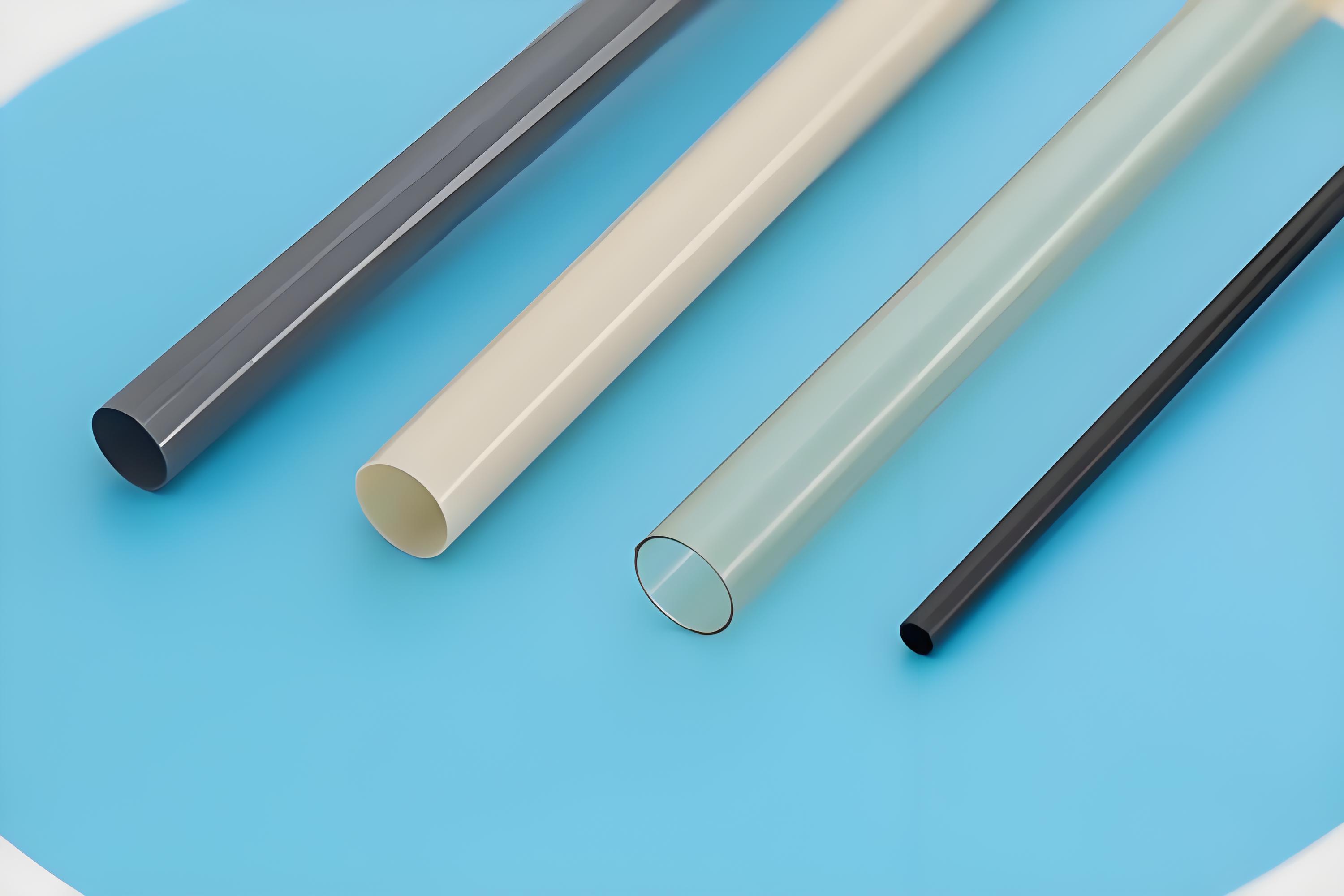
High transparency facilitates observation of fluid state;
The long-term use temperature is ≤200℃, slightly lower than that of PTFE.
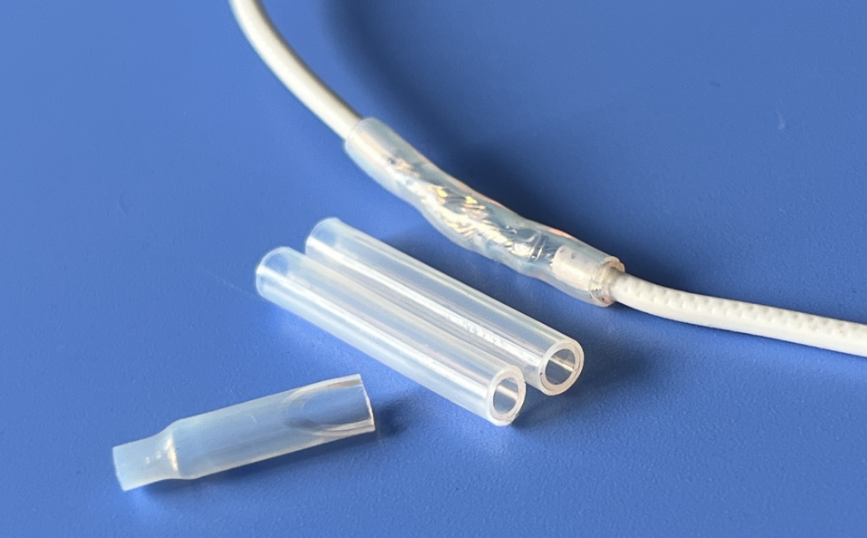
Applications: high-purity reagent delivery tubes, gas pipelines in semiconductor wafer manufacturing, laboratory ware, wire sheaths, etc.
3. Perfluoroalkoxy resin (PFA)
· Chemical structure: copolymer of tetrafluoroethylene and perfluoroalkyl vinyl ether, combining the advantages of PTFE and FEP.
· Characteristics:
Its chemical resistance is comparable to that of PTFE, and it can withstand strong acids, strong alkalis, and strong oxidants;
It can be melt processed and has good thermal stability;
The long-term use temperature can reach 260℃, which is superior to FEP;
With a smooth surface and minimal impurity precipitation, it is suitable for high-cleanliness environments.
Applications: ultra-pure fluid delivery systems in the semiconductor industry, chemical corrosion-resistant equipment, lining of high-purity reaction vessels, etc.
4. Polyvinylidene fluoride (PVDF, commonly known as F2)
Chemical structure: It is formed by the polymerization of vinylidene fluoride (VDF), containing some hydrogen atoms that are not replaced by fluorine.
· Characteristics:
It has high mechanical strength and better creep resistance than PTFE, FEP, and PFA;
o Good weather resistance and strong UV resistance;
The temperature resistance range is -40℃ to 150℃, with a short-term tolerance up to 180℃;
It possesses certain piezoelectricity and solderability.
Applications: architectural coatings, lithium battery separators, chemical valves, pipelines, solar backsheets, sensors, etc.
5. Ethylene-tetrafluoroethylene copolymer (ETFE, commonly known as F40 or "soft glass")
· Characteristics:
High transparency, with a light transmittance of over 95%, and a weight only 1% of that of glass;
The tensile strength is twice that of PTFE, approaching 50MPa;
Resistant to radiation and chemical corrosion, and suitable for thermoplastic processing;
O is known as "soft glass" and is widely used in architectural skylights, greenhouses, sports venues, and more.
Applications: Exterior wall membrane materials for Beijing Water Cube, transparent components for aerospace, photovoltaic module encapsulation, etc.
6. Other common fluoroplastics
table
type
abbreviation
Characteristics and Applications
Polyvinyl fluoride
PVF
It has good film-forming properties and strong weather resistance, and is used for aviation cables, solar backsheets, decorative films, etc.
Polytrifluorochloroethylene
PCTFE
Low permeability and high rigidity, suitable for seals, cryogenic containers, pharmaceutical packaging, etc.
Ethylene-chlorotrifluoroethylene copolymer
ECTFE
Resistant to strong oxidizing acids, used for chemical pump valves, tank linings, etc.
Tetrafluoroethylene-hexafluoropropylene-vinylidene fluoride copolymer
THV
It has good flexibility and can be heat-sealed, suitable for medical catheters, sealing strips, etc.
Supplementary explanation of classification dimensions
In addition to classification by chemical type, fluoroplastics can also be subdivided from the following dimensions:
Processing performance: It is divided into thermoplastic (such as FEP, PFA, PVDF) and thermosetting (such as PTFE, which requires sintering for molding);
Purity level: The semiconductor industry demands ultra-high purity to prevent metal ion contamination;
Temperature resistance grade: PTFE/PFA > FEP > PVDF;
Transparency: FEP, PFA, and ETFE are transparent, PTFE is translucent, and PVDF is opaque;
Cost: PTFE is relatively low, PFA is relatively high, and ETFE and THV belong to high-end specialty materials.